About Ambesten

Engineering-led support for electrical infrastructure

Ambesten Electricals brings related power, automation, engineering, testing, supply, and maintenance capabilities into a structured view of each requirement.

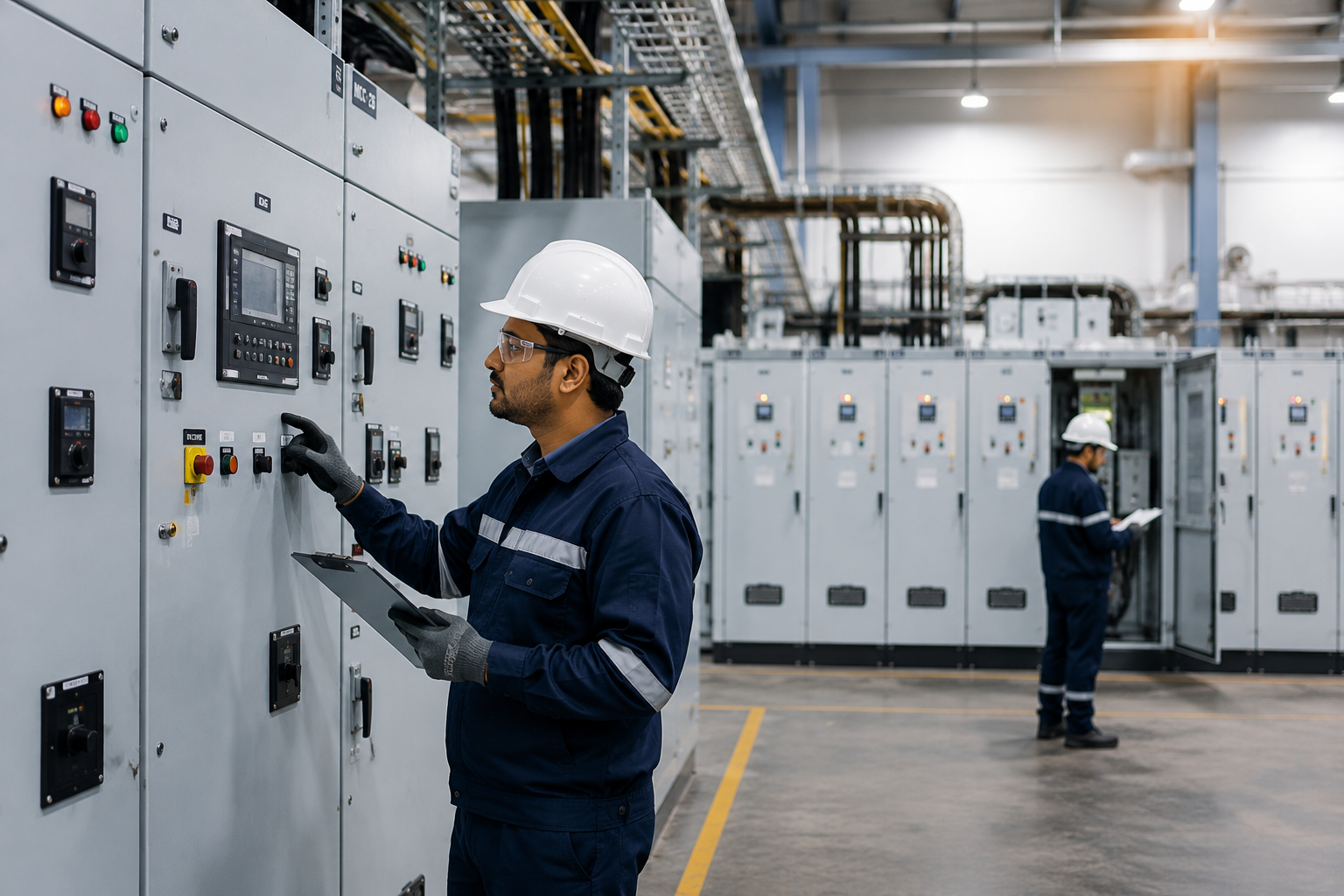
Electrical engineers reviewing technical drawings beside industrial control equipment
Electrical engineering team walking through an industrial cable installation

Company overview

A coordinated view of complex electrical requirements

Ambesten Electricals supports industrial electrical infrastructure requirements across power generation, transmission and distribution, industrial automation, engineering and design, testing and commissioning, maintenance, product supply, and E-House solutions.

The company brings these related capability areas into one coordinated view, helping project and operations teams define technical context, scope boundaries, interfaces, and lifecycle support needs for each requirement.

Purpose and principles

Built around clear requirements and responsible coordination

Ambesten Electricals approaches each requirement through clear technical context, defined responsibilities, and disciplined coordination across relevant electrical capabilities.

01 / Purpose

Support well-defined electrical requirements

Bring the relevant electrical, engineering, testing, supply, and maintenance considerations into a focused requirement discussion.

02 / Direction

Connect project and lifecycle needs

Consider project, commissioning, maintenance, and supply needs as related stages while keeping responsibilities and delivery models explicit.

03 / Working values

Quality, safety, integrity, and reliability

Use clear technical context, disciplined communication, and defined scope boundaries to support responsible project coordination.

Why Ambesten

A disciplined approach to electrical requirements

The emphasis is on understanding technical context, defining scope boundaries, and coordinating the electrical disciplines relevant to each requirement.

  1. 01

    Coordinated capability perspective

    Related electrical disciplines can be considered together while responsibilities and interfaces remain clearly defined.

  2. 02

    Engineering-led planning

    Technical requirements, operating context, and delivery boundaries provide the basis for planning and scope discussions.

  3. 03

    Lifecycle-aware support

    Project, commissioning, maintenance, and supply needs can be considered as connected stages without assuming one delivery model.

  4. 04

    Structured communication

    Clear requirements, scope boundaries, and documentation expectations support practical project coordination.

Working approach

From requirement context to coordinated delivery needs

A clear sequence connects the initial technical discussion with scope definition, discipline coordination, and the delivery or lifecycle support needs of the requirement.

  1. Stage 01

    Understand the requirement

    Establish the operating context, technical need, relevant assets, and the outcome the requirement is intended to support.

  2. Stage 02

    Define scope and interfaces

    Clarify responsibilities, boundaries, inputs, dependencies, and documentation expectations before activities are aligned.

  3. Stage 03

    Coordinate relevant disciplines

    Bring together the power, automation, engineering, verification, supply, or maintenance considerations relevant to the agreed requirement.

  4. Stage 04

    Align delivery and support needs

    Confirm the implementation, testing, commissioning, handover, or lifecycle-support needs that belong within the defined scope.

Bring your electrical requirement into focus

Use the Contact Us page to prepare the technical context and capability areas for a focused business discussion.